

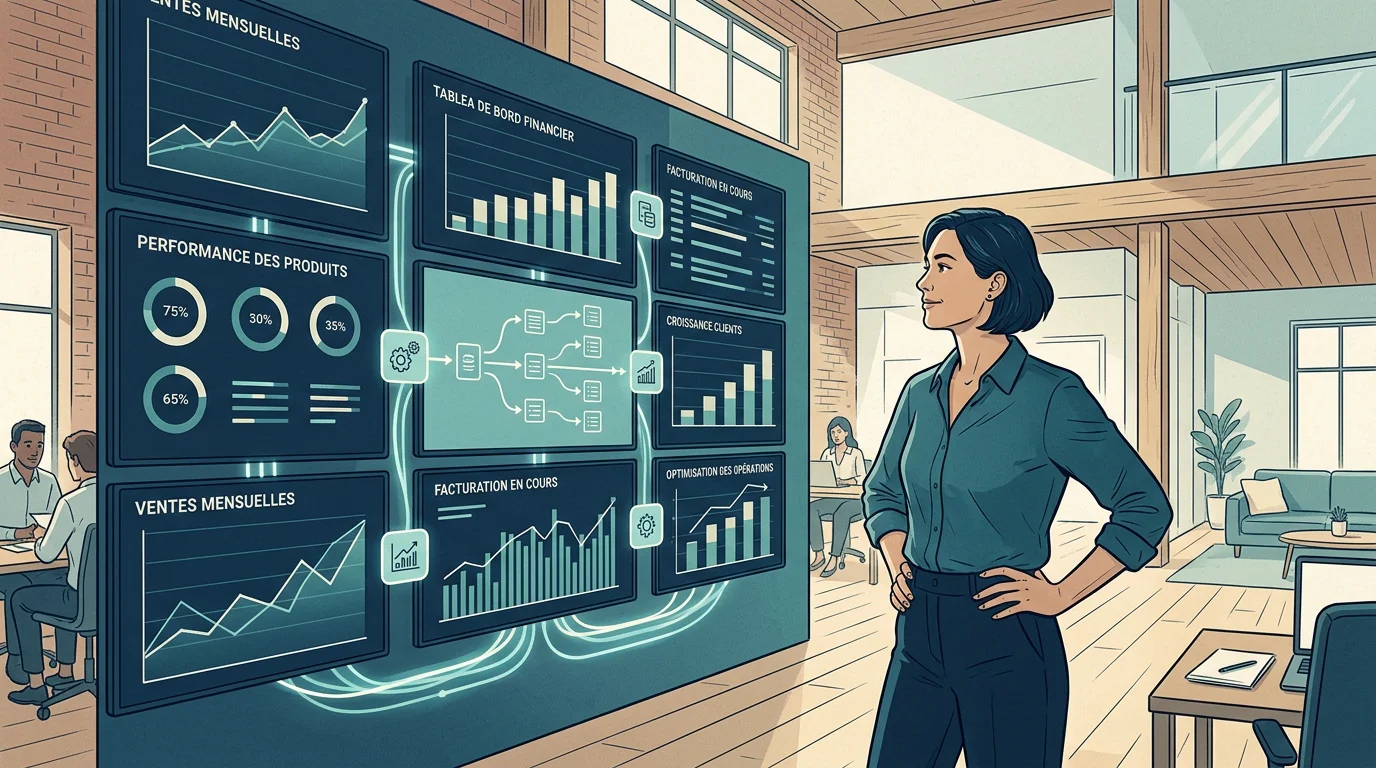
One out of two SME leaders moves forward without a defined digital strategy, yet the gains are now measurable and documented. Between scattered tools, repetitive tasks, and competitive pressure, the benefits of digitalization for an SME are no longer a theoretical debate. Before investing, a digital performance audit allows you to understand where you really stand and where to focus your efforts.
This is a strategic issue because falling behind is costly. According to the 2025 France Num barometer, business leaders' trust in digital technology remains stable, but the gap is widening between companies that structure their transformation and those that are passive bystanders. Understanding the mechanisms at play helps you transform a constraint into a sustainable advantage.
A Mixed Picture of Digitalization
Measuring the sme digitalization impact starts with tangible figures. According to France Num, 78% of VSE and SME managers believe digital technology represents a real benefit for their business, a trend that has remained stable over recent years.
However, adoption remains highly uneven. In 2025, 69% of VSEs and SMEs were equipped with invoicing software, a rate that climbs to 86% for SMEs alone. The industry, transport, and retail sectors are leading the way, while agriculture and hospitality trail significantly behind. This sector-specific divide explains why **digital transformation** yields such varying results from one company to another.
The main obstacle isn't technological; it's strategic. According to a survey by Bpifrance Le Lab, 45% of business leaders have no clear vision for their company's digital transformation, and among those who do, 63% have not established a clear roadmap. Digitizing without a clear direction means stacking up tools without creating value.
Tangible Benefits for Performance
Why take the plunge? Because the benefits affect both revenue and internal operations. Business leaders surveyed by France Num in 2025 cite increased turnover, streamlined customer communication, and simplified outsourcing of key functions like accounting and payroll.
In concrete terms, process digitalization acts on three levers:
- Efficiency: centralizing data breaks down departmental silos and provides a unified view of the business.
- Productivity: automating daily tasks frees up time for high-value-added missions.
- Competitiveness: leveraging data more effectively sharpens product offerings and customer relationships.
These benefits are not reserved for large corporations. The same mechanisms apply to a ten-employee company, provided you choose tools tailored to your actual workflows rather than a generic, ill-fitting software solution. This is precisely where the success or failure of a project is decided.
Automation: The Game-Changing Time Saver

How many hours does your team spend each week re-entering data, chasing outstanding invoices, or approving quotes? These repetitive tasks are the prime targets for digitalization. By automating quotes, invoices, reminders, and approvals, you can win back hours and reduce manual data-entry errors every week.
Artificial intelligence is accelerating this trend. According to Le Blog du Modérateur, 26% of VSEs and SMEs were already utilizing AI in 2025—a adoption rate that doubled in just one year. Quote generation, data analysis, round-the-clock assistants: these tools don't replace your teams, they free them from tedious chores.
To go beyond isolated tasks, many SMEs centralize their operations within an integrated system. Our SME ERP solution connects sales, inventory, invoicing, and accounting into a single workflow, eliminating double entries and making your business metrics more reliable.
ERP: Keeping a Frequently Derailing Project Under Control
A poorly managed ERP can cost more than it delivers. Integration projects are notorious for going off track: in this industry, a significant portion of deployments exceed initial timelines, and many balloon past their original budgets. The software itself is rarely to blame; rather, the issue stems from a lack of scoping and steering.
This aligns with Bpifrance's finding: without a clear roadmap, a major structural project can quickly turn into a money pit. Success relies on three pillars: a well-scoped outline, a project lead who understands your business, and effective change management that secures team buy-in.
We approach these projects with a pragmatic, results-oriented methodology. A successful ERP implementation relies on software aligned with your actual workflows, a tightly managed budget, and continuous support—rather than an over-engineered system that no one actually uses.
Cybersecurity and Compliance: The New Reflex
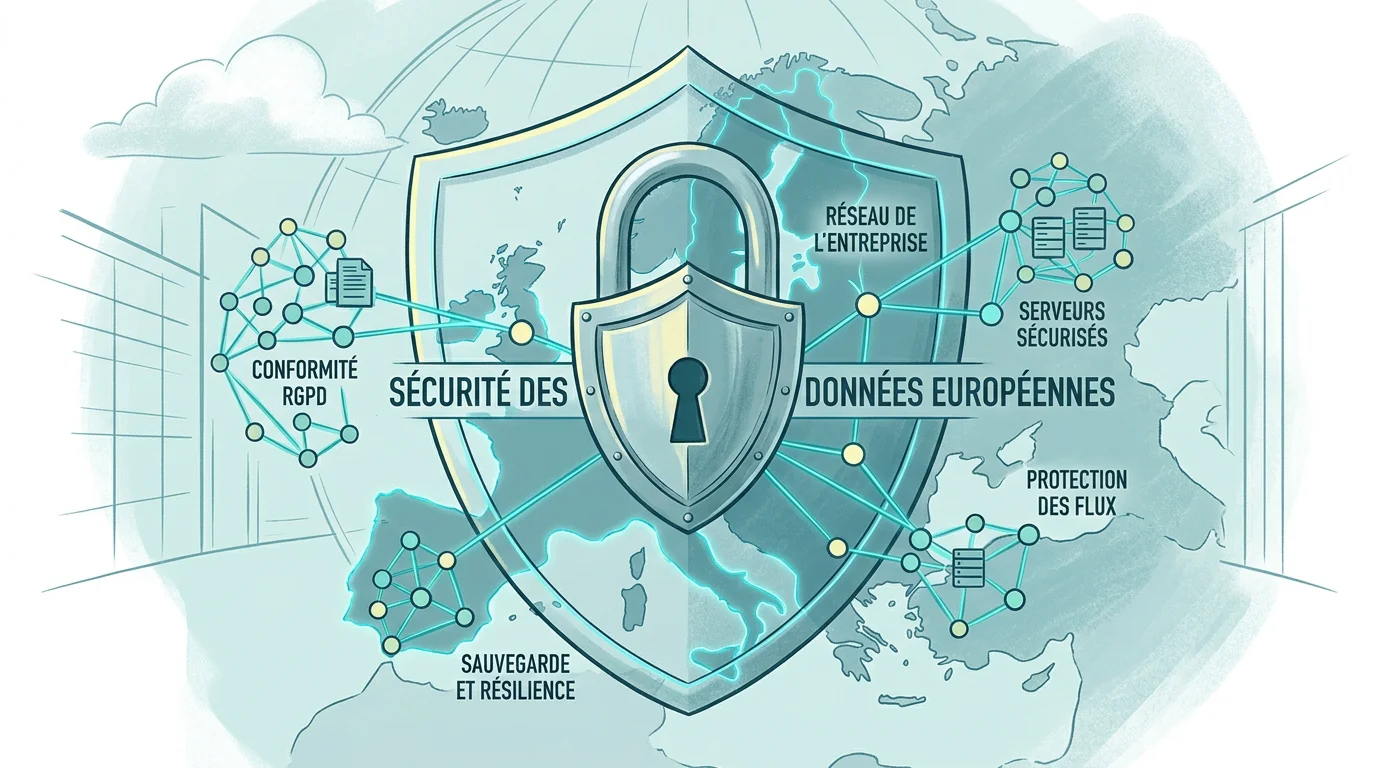
The more an SME digitizes, the more exposed its data becomes. In 2025, more than half of business leaders feared data loss or theft, according to France Num—a concern on a steadily rising trajectory. And with good reason: cybersecurity incidents now impact more than a third of small businesses.
The remedy isn't just an antivirus. It requires a combination of controlled hosting, encryption, external backups, and access traceability. GDPR compliance isn't a mere checkbox exercise: it builds trust with your clients. Hosting in Europe with auditable logs enables you to demonstrate your security integrity at any time.
Digital transformation also introduces new regulatory compliance obligations. Electronic invoicing is gradually becoming mandatory, reaching VSEs and SMEs by September 2027. Anticipating this timeline ensures you don't end up managing this transition in a last-minute rush.
How to Make Your Digital Transformation a Success
Digitizing without a structured method is just spending money without expecting a return. Three approaches exist for SMEs, each with its drawbacks. The table below compares them based on key criteria that define project success.
| Criterion | In-House CIO | Generic Online Solution | Our SapAngel Advisory Service |
|---|---|---|---|
| Alignment with workflows | High (if resources are available) | Low, standardized | Bespoke software tailored to your processes |
| Delivery timeline | Variable, often long | Immediate but rigid | 3-month delivery at a fixed price |
| Code and data ownership | Internal | Vendor lock-in | 100% proprietary ownership of code and data |
| Compliance and hosting | To be built | Often outside the EU | European hosting, GDPR compliant, auditable logs |
| Support & Advisory | Based on headcount | Standard support | Dedicated expert industry representative |
Many SMEs lack the internal IT resources to make these decisions. This is where a part-time CIO comes in: providing IT steering and strategy without the cost of a full-time position, and de-risking your technology choices. This double competency, both technical and operational, often makes the difference between a project that succeeds and one that stalls.
Moving from Awareness to Action
The figures point to one clear conclusion: digitalization creates value, but only when it is managed. Keep in mind the most telling metric: 45% of business leaders advance without a clear vision, while 78% acknowledge the benefits of digital. Therefore, the challenge is no longer about establishing the need, but about structuring the approach. Start with an honest assessment, prioritize one or two high-impact processes, and then scale gradually. This phased approach mitigates risk and delivers quick, visible wins, driving team buy-in. Combined with support that is collaborative, pragmatic, and ROI-oriented, your SME can turn digitalization into a sustainable competitive advantage rather than a passive expense. To ground your project in solid fundamentals, discover our SAP solution and let's discuss during a discovery call.
Frequently Asked Questions
How long does the digitalization of an SME take?
It depends on the scope. A single process can be automated in a few weeks, whereas a fully bespoke software application is typically delivered in three months using a structured, flat-rate approach.
Which processes should be digitized first?
Target repetitive and time-consuming tasks: quotes, invoicing, automated payment reminders, and approvals. These are the workflows that yield the most immediate time savings and the fastest return on investment.
How can we guarantee data security during a digital transformation project?
Prioritize European hosting, data encryption, and auditable logs. In 2025, more than one in two business leaders feared hacking, making GDPR compliance an essential selection criterion.