

Scattered spreadsheets, siloed tools that don't communicate, and time-consuming manual data entry: these pain points remain the daily reality for many SMEs. Yet, the global market for custom software development is projected to reach $50.6 billion by 2026, growing at an annual rate of 17.3%. This trend reflects a strategic shift: companies want tools tailored to their processes, not the other way around. If you are still hesitating between an off-the-shelf solution and custom development, the question deserves a thorough analysis, starting with a comparison of both approaches (custom ERP vs. off-the-shelf ERP).
In the following sections, you will find concrete guidelines to evaluate the need for a custom business software, scope your project, manage costs, and secure deployment. Each section is backed by verified data and real-world feedback to help you make the right decision.
Why Custom Software Is Experiencing Such Strong Growth
Organizations are accelerating their digital transformation to modernize operations, improve customer engagement, and refine decision-making. Custom software provides tailored workflows, seamless integration with legacy systems, and specialized business capabilities. This need for differentiation drives the market's trajectory.
In France, the digital sector remains highly dynamic. According to Numeum, it employs over 666,000 people and generates a revenue of over €70 billion, up 4.3% after a challenging 2025. The demand for tailored solutions is a key driver, as off-the-shelf tools often fail to cover the unique business rules of each industry.
Another key factor: 2026 marks the definitive year of AI industrialization in software development, according to an analysis by Polara Studio. According to the Stack Overflow Developer Survey 2025, 84% of developers use or plan to use AI tools in their development workflow. This industrialization reduces design times and makes custom software accessible for tighter budgets.
Custom Software vs. Off-the-Shelf Solution: Selection Criteria
The dilemma comes up in every board meeting. An off-the-shelf solution deploys quickly but forces you to adapt to its processes. Custom development requires a higher initial investment but adapts precisely to your workflows. Here are the criteria to consider.
| Criterion | Standard Solution (SaaS / ERP) | Custom Software | Our Mind Solution (SapAngel) |
|---|---|---|---|
| Business alignment | Partial, requires adjustments | Total, designed for your processes | Total, delivered in 3 months at a fixed price |
| Initial cost | Low (recurring subscription) | Higher (project investment) | Fixed price, no licenses or subscriptions |
| Code ownership | None | Complete | Complete, no vendor lock-in |
| Scalability | Limited to the vendor's roadmap | Unlimited, driven by your needs | Continuous support, upgrades without extra costs |
| GDPR Compliance | Varies by vendor | Controlled by design | European hosting, native encryption |
The SaaS trend remains strong: according to the annual Numeum and EY study, the SaaS model has been growing steadily since 2010, rising from 10% of software revenue to 43% in 2020, and then 45% in 2021. However, this growth does not mean that SaaS is suitable for every use case. When your processes are your competitive advantage, custom software is the obvious choice.
The Concrete Benefits of Custom Development
A custom-developed software yields tangible benefits on multiple levels. Let's look at the most decisive ones for an SME or mid-market company.
Productivity and Automation
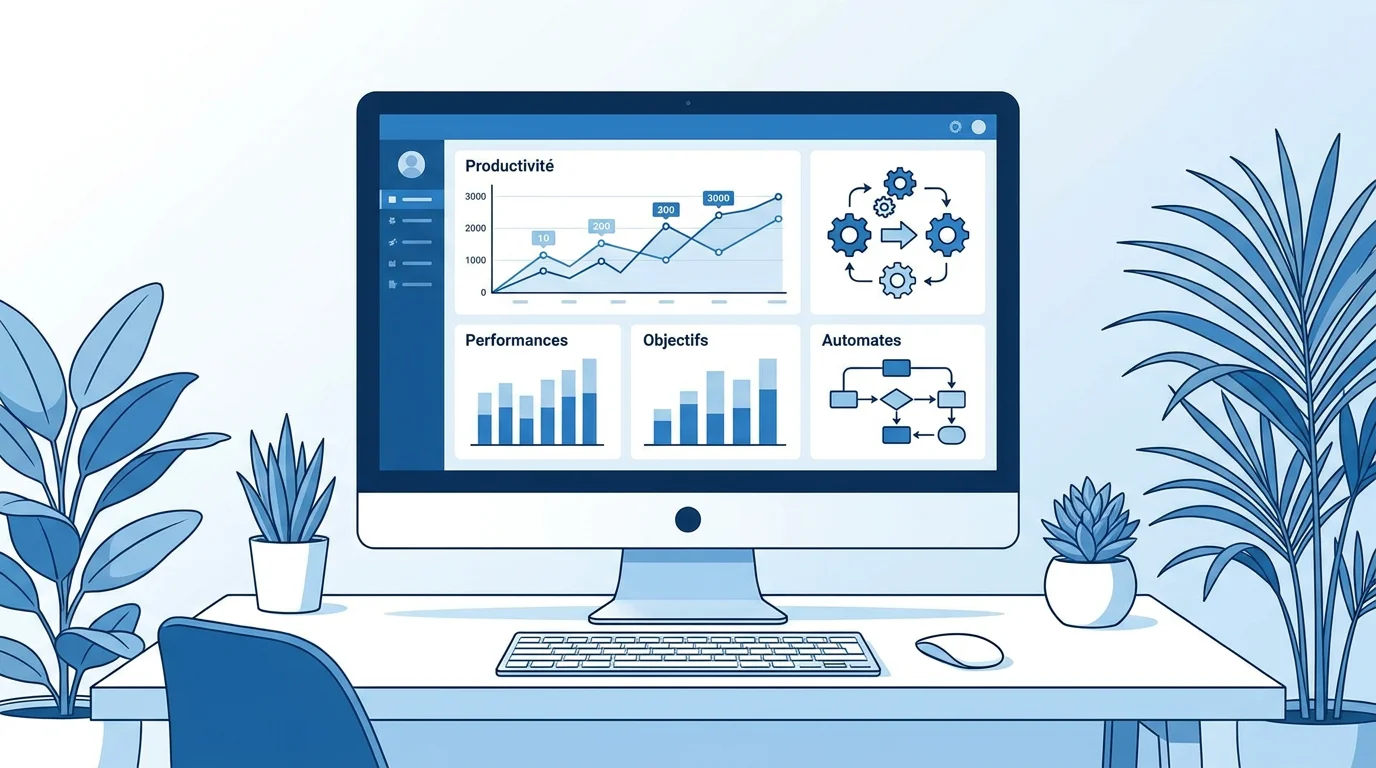
Automating repetitive tasks (quotes, invoicing, follow-ups, approvals) frees up time for high-value tasks. Your teams will no longer juggle multiple incompatible tools; a single system centralizes both data and workflows.
Full Ownership and Independence
With custom software, you own the source code and the data. No recurring licensing fees, no dependence on a vendor that might raise prices or drop features. This sovereignty is particularly crucial for GDPR compliance and data localization in Europe.
Measurable ROI
In 2024, global spending on digital transformation technologies exceeded $2.3 trillion, with 35% to 40% spent on custom software development, according to Global Market Insights. This share confirms that businesses expect a concrete return on investment from these projects. A perfectly calibrated tool reduces errors, accelerates cycles, and improves customer satisfaction.
Embedded Artificial Intelligence
In 2025, the smart and analytical technology segment represented 27% of the custom development market, with a projected annual growth rate of 21.5% through 2035. AI integrated into business software enables automatic quote generation, real-time data analysis, or lead qualification without human intervention.
Key Stages to Ensure Project Success
A custom software development project follows a rigorous methodology. Here are the six key phases to master.
1. Define the Primary Goal
Summarize in a single short sentence the value that the software must generate. This exercise, similar to an elevator pitch, forces you to pinpoint the core benefit: saving time, reducing errors, or centralizing data.
2. Map Out Users and Processes
Identify user personas, their constraints, and their expectations. Map out current workflows to locate bottlenecks and avoidable manual workarounds.
3. Write the Specifications Document
The specifications document is the shared agreement between you and the development team. It must outline the functional scope, business rules, security constraints, required integrations, and measurable acceptance criteria.
4. Design a MVP (Minimum Viable Product)
Rather than developing everything at once, start with a core functional version that covers priority use cases. This iterative approach reduces risks and allows for quick validation against real-world usage.
5. Develop, Test, Iterate
Each sprint delivers a functional increment tested by end-users. Feedback is continuously integrated to optimize user experience and business value.
6. Deploy and Support
Deployment includes team training, data migration, and post-launch support. A software delivered without change management risks a low adoption rate, regardless of its technical quality.
What Budget to Plan for Custom Business Software
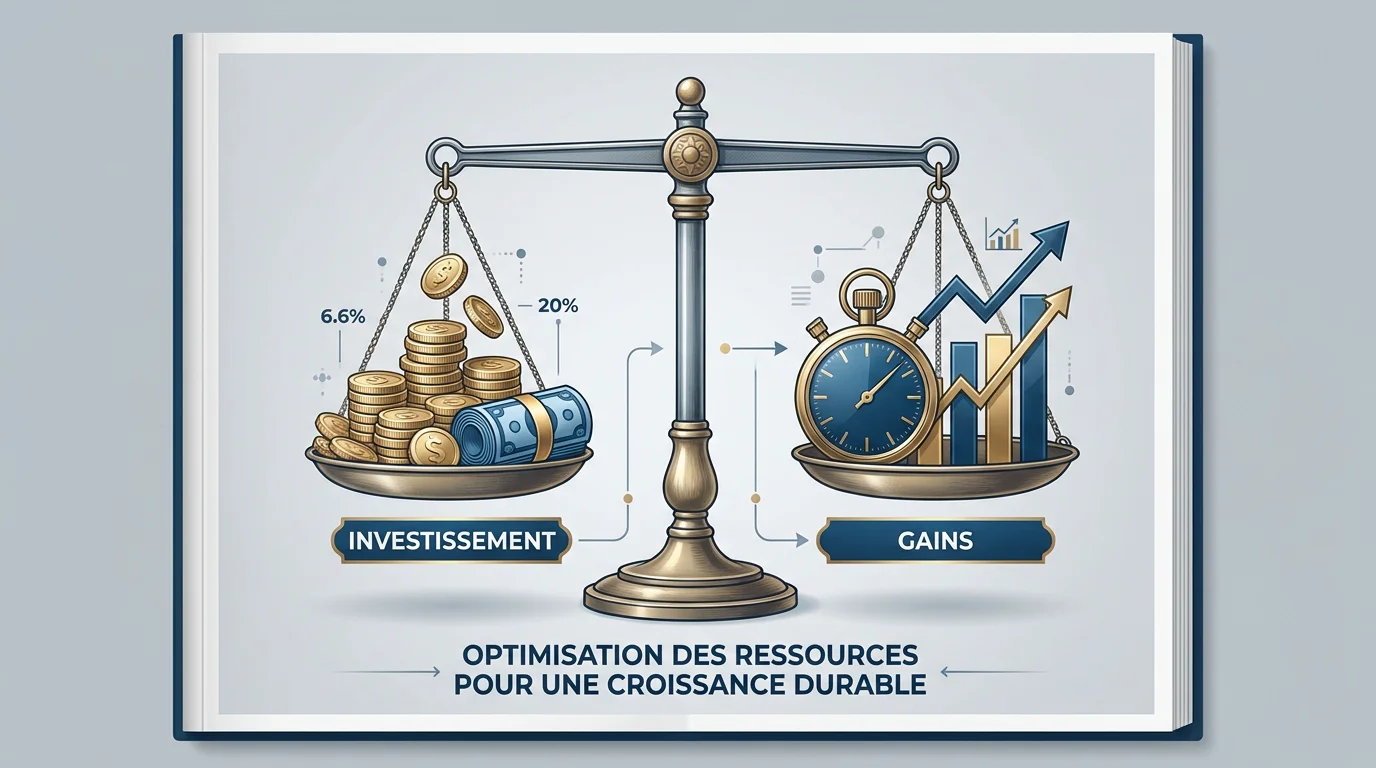
The price range of custom software development varies significantly depending on the project's complexity. Industry benchmarks generally place the investment between €50,000 and €500,000. Several factors influence this cost.
- Process complexity: the more business rules there are, the longer development takes.
- Number of integrations: connecting the software to an ERP (SAP, Microsoft Dynamics 365), a CRM, or third-party tools adds extra layers of work.
- Data volume: data structuring, migration, and security directly impact the timeline.
- Change management: training, documentation, and support represent a cost that is often underestimated.
The right mindset focuses on value generated rather than cost. A modest investment in a poorly designed tool yields minimal results. Conversely, a well-scoped project generates measurable gains in efficiency, error reduction, and team satisfaction.
Security, Compliance, and Data Sovereignty
Security is a non-negotiable criterion. The DevSecOps market is reaching $10.88 billion in 2026, and the average cost of a data breach stood at $4.44 million according to IBM's 2025 report. Custom software allows you to integrate security by design, rather than as an afterthought.
The essential checkpoints in any custom development project are data encryption at rest and in transit, granular access control, activity logging for audit trails, native GDPR compliance, and the choice of sovereign hosting (servers in Europe). The Digital Resilience Index (IRN), launched by Bercy in January 2026, now provides executive committees with a standardized language to assess their technological dependencies, according to Polara Studio.
For manufacturing and industrial companies, business continuity and production data confidentiality are critical issues. Custom software offers the choice between on-premise deployment, a private cloud, or hybrid hosting, depending on your certification requirements (such as ISO). Discover how this approach applies in practice on our page dedicated to custom software for industry.
How to Choose the Right Development Partner
The choice of partner determines the success of the project as much as the specifications. Here are the criteria to prioritize.
Industry Expertise, Not Just Technical Skills
A great partner understands your industry before talking about technology. They ask the right questions about your workflows, regulatory requirements, and performance goals. A dedicated partner with industry expertise makes a major difference in the quality of specifications.
Commitment to Deadlines and Budget
Budget and schedule overruns remain common in IT projects. According to Panorama Consulting, 42% of ERP projects miss their deadlines, and 23% to 45% exceed their budget. A fixed-price contractual commitment with a clear timeline significantly mitigates this risk.
Post-Delivery Support
Software is never static. Needs evolve, teams change, and regulations tighten. The ideal partner provides continuous support to scale the tool without putting a strain on your internal teams.
Transparency and Code Ownership
Demand full ownership of the source code and data from the very start. Ensure the architecture is documented, modular, and maintainable by a third party if necessary. The absence of vendor lock-in guarantees long-term freedom.
The Custom Software Market in 2026: Trends to Follow
The global custom software development market was valued at $44.2 billion in 2025 and is projected to reach $50.6 billion by 2026, according to Global Market Insights. Several structural trends are driving this momentum.
AI as a development co-pilot: a GitHub study of 4,800 developers shows that tasks are completed 55% faster with an AI coding assistant. This productivity gain directly reduces timelines and costs for custom projects.
Low-Code and No-Code as a complement: Low-Code and hybrid development models are quickly gaining popularity, reducing implementation timelines and making projects viable with limited technical resources. They do not replace custom development for complex processes, but they accelerate the creation of simple functional modules.
Digital sovereignty: investments in digital sovereignty represent budgets of €150,000 to €200,000 per company in France, according to data from Polara Studio. Custom development naturally meets this requirement by offering full control over hosting and data localization.
Software eco-design: in France, the RGESN (General Guidelines for Eco-design of Digital Services), co-produced by Arcep, ADEME, and DINUM, was updated in 2026 to cover data and AI projects. Custom-developed software integrates these requirements right from the design phase, which is harder to achieve with an off-the-shelf solution.
Conclusion: Turning Your Processes into a Competitive Advantage
Custom software is no longer a luxury reserved for large enterprises. With a market exceeding $50 billion in 2026 and AI tools accelerating development cycles, SMEs and mid-market companies now have concrete access to solutions tailor-made for their processes. The key is to rigorously define requirements, choose a partner committed to timelines and budget, and guarantee full ownership of your tool and your data.
This is exactly the approach we stand for: industry-focused guidance, a fixed-price deliverable in three months, and complete independence from any software publisher. To find out how this method applies to your context, discuss your custom project with us.
Frequently Asked Questions
Is custom software necessarily more expensive than a SaaS solution?
The initial investment is generally higher, but there are no recurring licensing fees. Over five years, the total cost of ownership of custom software is often comparable to, or even lower than, the cumulative cost of a SaaS subscription. The gap widens in favor of custom development when processes are complex and unique.
How long does it take to develop business software?
The timeline depends on complexity and scope. A functional MVP can be delivered in three months using an agile methodology and rigorous scoping. At SapAngel, we commit to this timeline with a fixed price to guarantee project predictability.
How do you guarantee data security in custom software?
Security is built-in from the ground up: encryption, access right management, activity logging, GDPR compliance, and European hosting. A security audit at each stage of development helps detect and patch vulnerabilities before launching.