
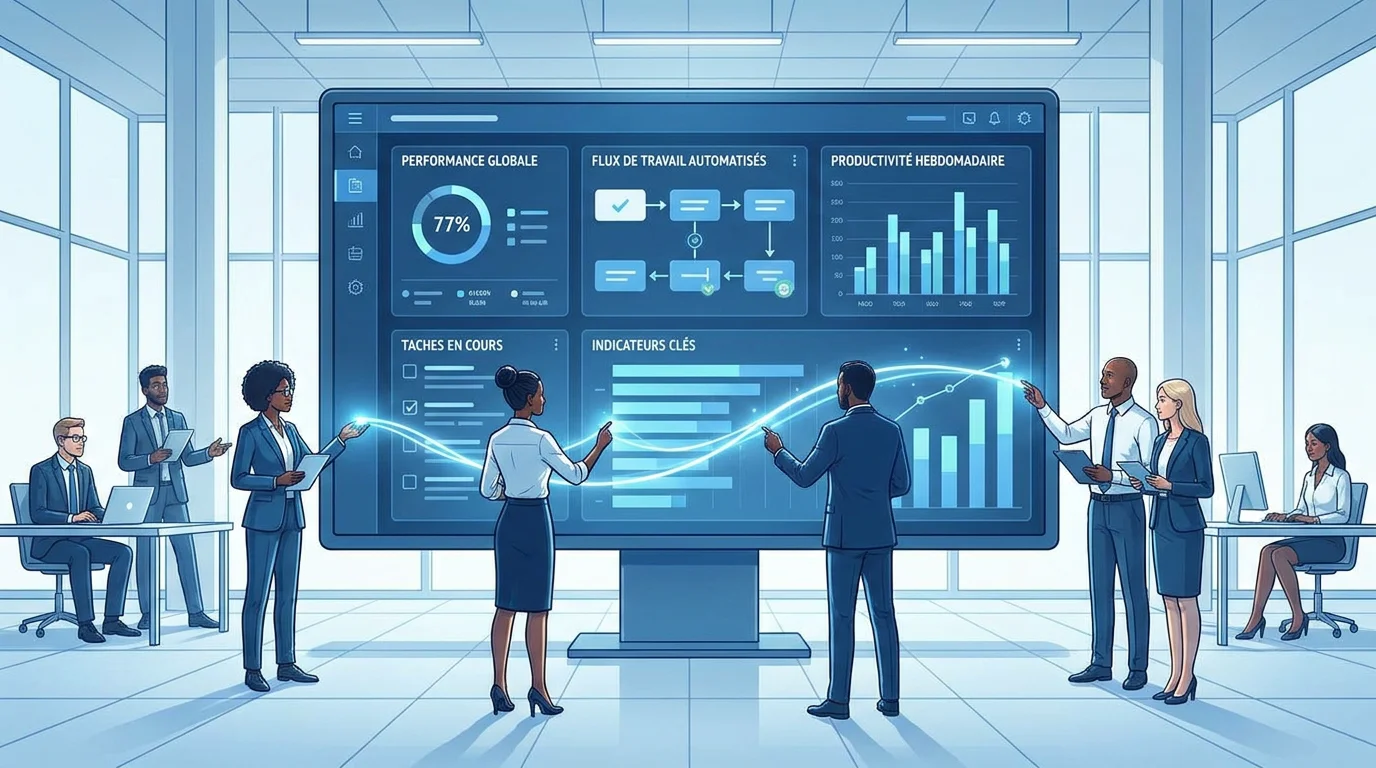
In 2024, global spending on digital transformation exceeded $2.3 trillion, with 35% to 40% dedicated to custom software development. This figure illustrates a belief shared by a growing number of leaders: off-the-shelf tools are no longer enough to stand out. Faced with multiplying business processes, competitive pressure, and regulatory requirements, a custom solution has become an essential strategic lever. If you are still hesitant between standard software and custom development, comparing a Custom ERP vs. Off-the-Shelf ERP helps clarify the stakes.
This reality is even stronger in 2026, as artificial intelligence, sovereign cloud, and technical talent shortages reshape the priorities of SMEs and mid-market companies. Building software tailored to your needs is no longer a luxury; it has become an operational necessity to automate, secure, and drive performance. Here is why, and above all how, to make this project a success.
Why the Custom Software Market is Accelerating in 2026
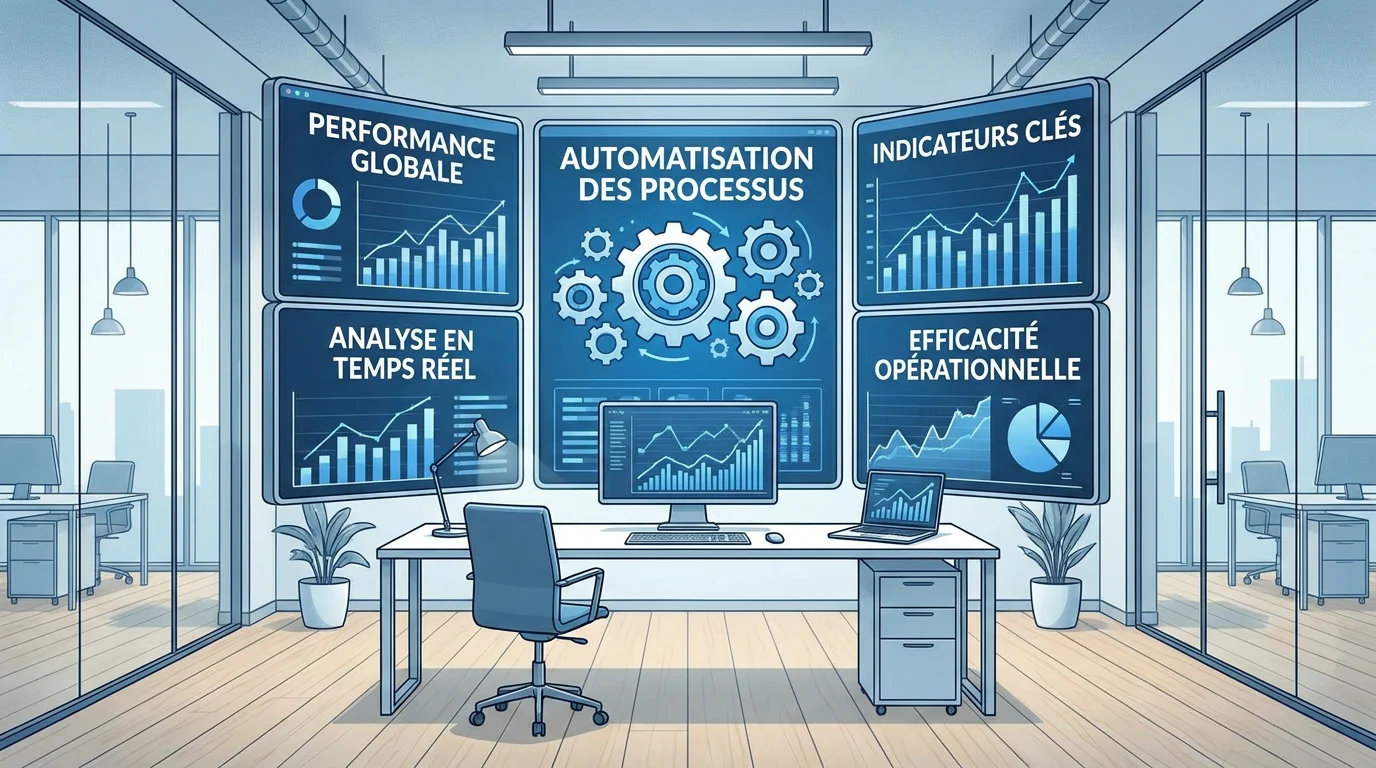
The development of custom software has seen steady growth for several years, and projections confirm this dynamic. According to Global Market Insights, the global custom software development market was valued at $44.2 billion in 2025 and is expected to reach $50.6 billion in 2026, with a compound annual growth rate of 17.3% through 2035. These figures reflect a structural shift in how companies invest in their digital tools.
Several factors are driving this acceleration. Organizations are speeding up their digital transformation to modernize operations, improve customer engagement, and strengthen decision-making; custom software enables tailored workflows, integration with legacy systems, and industry-specific capabilities. Generic solutions, built for the masses, force compromises that the most agile companies are no longer willing to accept.
At the same time, subscription-based software revenues are expected to represent more than 60% of the total enterprise software market by 2026, according to Market Research Future. While convenient, this SaaS model leads to vendor lock-in and recurring costs that some organizations prefer to avoid by choosing license-free custom development.
Custom Solution vs. Standard Software: Key Selection Criteria
Should you build a tool perfectly tailored to your processes or adopt existing packaged software? The answer depends on four key factors: the specificity of your needs, your budget, your timeline, and your long-term vision.
| Criterion | Standard Software (SaaS) | Custom Solution | Our MIND Solution |
|---|---|---|---|
| Business Fit | Generic features, compromises required | Design aligned with your exact processes | Development centered on your actual business workflows |
| Upfront Cost | Low (monthly subscription) | One-time project investment | Fixed price, no licenses or subscriptions |
| Long-term Cost | Cumulative (subscriptions, modules, users) | Controlled, full code ownership | No vendor lock-in, measurable ROI |
| Implementation Timeline | Immediate to a few weeks | 3 to 12 months depending on complexity | Delivery in 3 months |
| Scalability & Flexibility | Depends on the vendor's roadmap | Total, based on your priorities | Autonomous evolution, dedicated support |
When it comes to return on investment, a custom solution offers a structural advantage. Software that precisely automates your repetitive tasks (quotes, invoicing, follow-ups, approvals) generates higher productivity gains than a generic tool that covers 80% of your needs and leaves the rest to spreadsheets. The higher initial cost pays off through the absence of recurring subscriptions and the elimination of information silos.
On the other hand, if your needs match a highly standardized use case (like a simple messaging app or videoconferencing tool), off-the-shelf software remains relevant. Custom development makes complete sense when your business processes are a competitive advantage you want to protect and optimize.
The Five Strategic Advantages of Custom Software for SMEs and Mid-Market Companies
Why are more and more mid-sized businesses taking the plunge? Here are the five most decisive benefits.
1. A Perfect Fit for Your Processes
A custom development molds to your existing workflows, not the other way around. You don't need to change your organization to adapt to software. Every feature addresses a specific, identified use case, which speeds up team adoption and reduces resistance to change.
2. Full Ownership of Code and Data
Unlike SaaS models where your data passes through a third-party vendor's servers, custom software guarantees your digital sovereignty. You host your data in line with your compliance requirements (GDPR, industry standards) and retain full ownership of the source code.
3. A Sustainable Competitive Advantage
A tool designed solely for you cannot be replicated by your competitors. Where standard packaged software standardizes practices across your industry, a tailored solution turns your processes into a strategic differentiator that is difficult to copy.
4. Scalability Without Vendor Constraints
With standard software, you are dependent on the vendor's roadmap for updates and new features. A custom tool evolves at your company’s pace: adding modules, integrating new partners, and adapting to new markets.
5. Measurable Productivity and Cost Gains
Targeted automation of low-value tasks frees up time for your business teams. When this automation is coupled with integrated AI assistants (quote generation, data analysis, lead qualification), the gains often amount to dozens of hours per month per employee.
Artificial Intelligence: A Catalyst for Custom Development
According to the Stack Overflow Developer Survey 2025, 84% of developers use or plan to use AI tools in their development process. This massive adoption is transforming how custom software is designed, tested, and deployed.
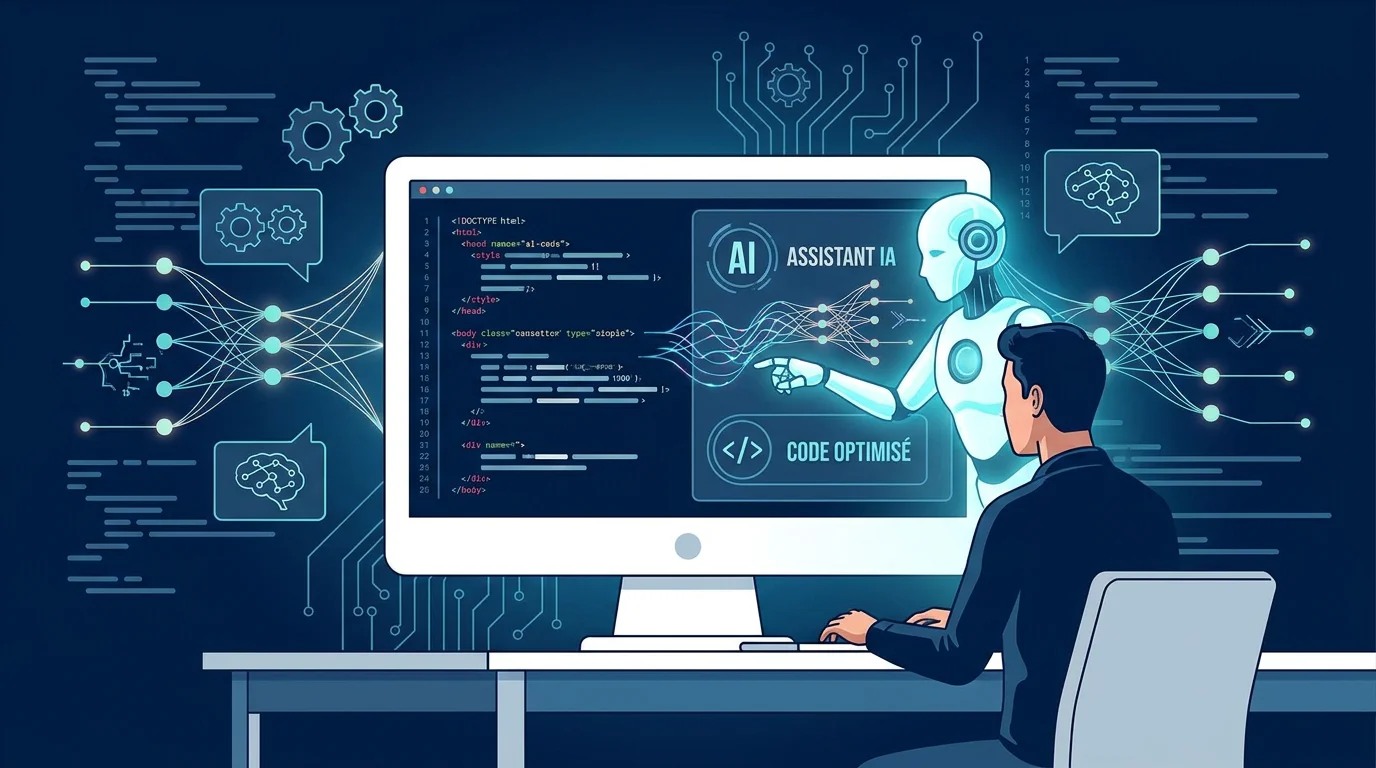
A GitHub study of 4,800 developers shows that tasks are completed 55% faster with AI assistance, as reported by Polara Studio. This increased productivity shortens development cycles, delivering functional solutions in a matter of months, whereas it previously could take an entire year.
For companies commissioning custom software, AI also delivers direct value within the final product: recommendation engines, predictive analysis, support chatbots, and automated document generation. These capabilities, once reserved for large corporations, are now accessible to SMEs thanks to modular technology building blocks.
We integrate these technologies into our MIND solution, offering native AI assistants for quote generation, data analysis, and 24/7 customer support, all hosted within Europe and in full compliance with GDPR.
Talent Shortage and Outsourcing: How to Secure Your Project
According to ManpowerGroup (surveying 39,000 employers across 41 countries), AI expertise has become the hardest skill to find in the global market; 72% of employers admit to facing major difficulties in filling technical roles. This landscape makes in-house hiring of developers particularly complex and costly for mid-market companies.
Outsourcing development to a specialized partner is a pragmatic response. However, you must choose a provider that offers solid guarantees: a fixed price, contractual timelines, code ownership, and, above all, post-delivery support to evolve the tool without overburdening your in-house teams.
This is precisely the promise we deliver on, providing a dedicated point of contact with the business expertise needed to understand your challenges. With over 20 years of field experience and a portfolio of over 40 supported clients, we have mastered the classic pitfalls of digitalization projects.
Key Steps to Make Your Custom Software Project a Success
Phase 1: Scoping and Needs Analysis
Before a single line of code is written, mapping your current processes, identifying pain points, and defining measurable objectives (reducing processing times, improving conversion rates, decreasing errors) is essential. An outside perspective brings valuable insight to separate real needs from superfluous requests.
Phase 2: Functional and Technical Design
This phase produces detailed specifications, interface mockups, and the software architecture. This is the moment to validate technological choices (cloud, on-premise, hybrid), integrations with your existing tools (ERP, CRM, accounting), and security requirements.
Phase 3: Iterative Development
Agile methods allow for delivering intermediate versions at regular intervals (two-to-four-week sprints). You test, validate, and adjust continuously, reducing the risk of a gap between the delivered product and the initial requirements.
Phase 4: Testing, Deployment, and Training
Unit, integration, and load testing guarantee the software's reliability. Deployment goes hand-in-hand with user training to maximize adoption. A change management plan is often necessary for larger organizations.
Phase 5: Monitoring, Maintenance, and Evolution
Custom software lives and evolves alongside your company. Corrective maintenance ensures stability, while evolutionary maintenance adds new features in line with your strategic priorities.
Sectors Where Custom Solutions Make a Difference
Certain sectors benefit more than others from tailored business software. Manufacturing, for instance, requires solutions capable of managing complex bills of materials, dynamic production schedules, and regulatory traceability. Discover how we address these challenges with our manufacturing solutions.
Sectors like finance, human resources, commerce, and customer service also derive substantial benefit from custom solutions. Driven by the need to operate efficiently, improve customer relationships, and remain competitive, companies need to build custom software, as highlighted by Global Market Insights. Whether it is automating internal approvals, centralizing scattered data, or driving performance via real-time dashboards, custom solutions offer a precise response to every business challenge.
The enterprise software market is placing more and more emphasis on user experience and personalization as key drivers of adoption; organizations recognize that user-friendly interfaces and custom solutions have a significant impact on employee productivity and satisfaction.
Avoiding Pitfalls: Mistakes to Avoid
According to data from Panorama Consulting, 42% of ERP projects run over schedule, and 23% to 45% exceed their budget. These figures, while specific to ERPs, illustrate the risks inherent in any major software project. Here are the three most common pitfalls.
- Underestimating the initial scoping phase. Vague specifications lead to costly back-and-forth during development. Invest time in the analysis phase to save months later.
- Neglecting change management. The best software in the world is useless if teams do not adopt it. Involve end-users right from the design phase and plan a structured training program.
- Choosing a provider without a guaranteed outcome. Demand a commitment on timelines, budget, and deliverables. A fixed-price model protects your investment and aligns the provider's interests with yours.
In conclusion, opting for a custom solution is a fundamental choice that transforms your business processes into lasting competitive advantages. In a custom software market projected to exceed $50 billion in 2026, companies investing in tools tailored to their actual needs gain productivity, reliability, and autonomy. What makes the difference is the quality of support: a partner that delivers in 3 months at a fixed price, with no vendor lock-in or subscription fees, and remains by your side to help the tool evolve. To bring your project to life, book a call to discover our MIND solution and see the impact on your organization.
Frequently Asked Questions
How much does custom software development cost?
The cost depends on the functional complexity, the number of integrations, and the level of customization desired. A project can range from a few tens of thousands of euros for a targeted business tool to several hundred thousand for a comprehensive platform. Our fixed-price approach guarantees you control over your budget from the start, with no surprises.
What is a realistic timeline for delivering a custom solution?
Timelines generally vary from 3 to 12 months depending on the scope of the project. At SapAngel, we deliver custom MIND software in 3 months using a proven methodology and reusable technology blocks. This timeline includes scoping, development, testing, and deployment.
How do you ensure maintenance and evolution after delivery?
A good partner offers post-delivery support that includes corrective maintenance, user support, and functional evolutions. The goal is to keep the tool active and growing without mobilizing internal technical resources, while retaining full ownership of both code and data.